

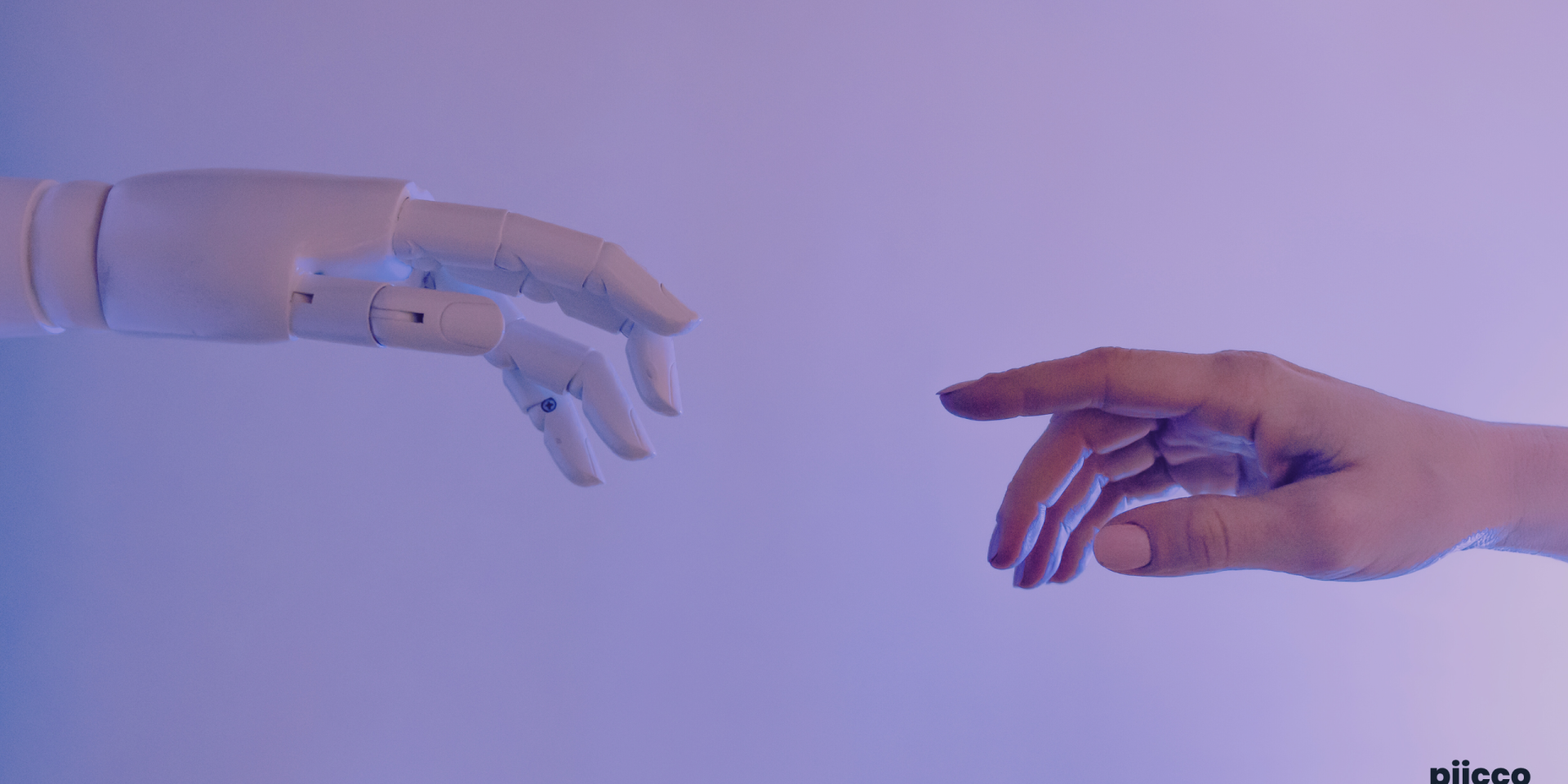
Leading in a world disrupted by AI Why human leadership is the way of the future
“A real leader will be looking at how they can strengthen their communication skills, their ability to connect with others, to share with others, to listen actively. We need to be nurturing that 10% of what artificial intelligence (AI) cannot do – what makes us human – to better our leadership to lift up our employees and to be open to this incredible opportunity of disruption.” – Kate Arthur
My conversation with Kate Arthur, MBA, founder and trailblazer in AI and digital literacy, during my podcast Leading in a world disrupted by AImade me reflect.
I realized that I hadn’t really considered the impact of AI on my leadership. Granted, I use more and more technological tools to gain efficiency, but in all of this, I hadn’t thought about how it would change the way I lead and inspire others. In talking about this, I noticed that many colleagues and friends hadn’t considered it either. Many think their leadership won’t change. But is that really the case?
We know that AI is transforming everything. Gartner (2024) even identified AI as the next big revolution after digital technology. It is redefining the ways we work, make decisions, and interact. It’s impressive: AI accomplishes many tasks quickly, efficiently, and often better than we do. Whether at work or more generally, we are hyper-connected.
Paradoxically, levels of engagement at work are historically low (Gallup, 2024). Studies report stress, isolation, and loss of motivation. Technology makes life easier but doesn’t necessarily make us happier. According to a Gartner HR study (2022), 90% of HR executives believe that leaders need to focus on the human aspects of leadership to succeed. Yet only 29% of employees say their leaders are effective human leaders. So, there is certainly room for improvement and development.
That being said, the future remains unknown, and we don’t quite know what to expect. However, we do know that leadership will always be necessary. Leaders will need to adapt and ensure that there is humanity at work, and the sooner they start, the better.
In this context, I asked myself: what does AI change for leaders? What makes us human? And what does this imply for leadership today?
Leadership and AI: An inevitable coexistence
Knowing that AI will only increase, it becomes useful to better understand what it is, its impact, and its utility. My goal isn’t to educate you on AI, but I recommend finding credible sources that are easily accessible. I do recommend reading Kate Arthur’s book Am I Literate? A Memoir, to be available in March 2025.
The massive arrival of AI forces leaders to manage new realities:
- Access and overload of information: AI gives us access to so much data that it becomes difficult to focus on what matters.
- Human disconnection and emotional distance: Virtual tools and automation, while efficient, can make our interactions more mechanical and less authentic.
- Increasingly complex decisions: AI provides information, facts, and analyses, but it doesn’t take into account the ethical, emotional, or cultural nuances that leaders need to consider.
What AI can do (and cannot do)
AI offers incredible tools that are transforming the way we work. However, it also presents limitations that don’t replace humanity in leadership.
Strengths of AI
- Automation: It can handle repetitive, time-consuming tasks, freeing up time for strategic and creative activities.
- Analysis and Prediction: With its ability to process large amounts of data, AI can identify trends and predict precise outcomes.
- Objectivity: Lacking emotions or personal biases, AI provides neutral and reliable analyses.
- Personalization: It tailors services and recommendations to individual needs, enhancing the user experience.
- Rapid data processing: Whether analyzing images, processing languages, or providing feedback, AI excels in speed and precision.
Limits of AI
- Lack of human judgment: AI doesn’t understand the subtleties of social, cultural, and ethical implications.
- Lack of emotional intelligence: It cannot handle emotions or show empathy in delicate situations or conflicts.
- Limited creativity: While AI imitates, it doesn’t generate new ideas like humans do.
- Judgment and contextual understanding: AI can misinterpret ambiguous or complex situations.
- Inability to express authentic humanity: It cannot form real connections or deep interactions.
Why being human remains essential
While AI is an asset for certain tasks, it has limitations that highlight the importance of human leadership. Technology will continue to transform our work environments, but in all this change, it’s our ability to connect as humans that will make the difference. And that cannot be automated. As leaders, we have the responsibility to preserve and strengthen what makes us human.
“Humans want to be led by other humans, even if that humanity comes with flaws and disorder.” – Rasmus Hougaard, Jacqueline Carter, and Rob Stembridge (2024)
It’s not just about managing hierarchical relationships, but managing human-to-human relationships, starting with oneself.
Leadership
Leadership is often associated with the power to act and lead, associated to those in higher organizational positions. However, when we look at the etymology of the word “leadership,” the meaning is more closely related to that of a guide who can influence and inspire others or organisations to achieve collective goals. Leadership is thus less about « doing » something (Know-how) than about « being » a certain way (Savoir être) to move something forward.
As Sesil Pir explains, according to human physiology, our brains and hearts function in harmony, as one. She observes that many leaders live too much in their heads, which creates an imbalance. They rely more on their « know-how » than on their « Savoir être », compensating with rigid patterns, leaning on their authority and expertise rather than on their authenticity. This suggests that the more we evolve in leadership, the more important it is to be balanced and live in harmony with our whole being, including the heart.
This leads us to human leadership.
Human leadership
Being human encompasses multiple facets and qualities that shape our thoughts, emotions, and actions. Although there is no unanimous definition of human leadership, many experts in management and organizational psychology identify common principles, focusing on « Savoir être ».
Human leadership is a people-centered style that values human relationships and aims to create environments where everyone can feel valued and reach their full potential.
Embracing human leadership means:
- Enhancing integrity, fairness, respect, and transparency.
- Fostering trust and innovation.
- Creating a sense of belonging and community.
- Committing to the well-being and personal and collective growth.
Human leadership, founded on respect, trust, empathy, and wisdom, has beneficial effects at all levels. Being able to lead from within, in harmony with one’s values, improves not only the well-being of leaders and their teams, but also organizational performance.
Essential human qualities for Leadership
According to Gartner (2022), human leadership is based on three fundamental components: authenticity, empathy, and adaptability. Hougaard, Carter and Stembridge (HBR 2024) mention the importance for leaders to embody their humanity – including vulnerabilities and imperfections – while developing three essential qualities: awareness, compassion, and wisdom.
While there are others, such as creativity and resilience, I chose to explore five essential qualities of human leadership, and I combined empathy and compassion together.
- Awareness
Awareness is at the core of our existence. It’s the ability to be aware of oneself, thoughts, emotions, environment, experiences, and more. It helps manage emotions, priorities, and have a holistic view to make informed decisions, and show critical thinking in a rapidly evolving world.
This human trait isn’t accessible to AI, which lacks self-awareness, the ability to make independent choices, or the ability to empathize with others or connect at meaningful emotional levels.
2. Authenticity
Authenticity means being honest in our intentions, transparent about decision-making processes, and inspiring confidence by ensuring consistency between our words and actions. It’s about being realistic, open, and optimistic rather than adopting naïve positivity.
It is about creating a safe space where everyone can express their true identity while promoting inclusion and maintaining professionalism and respect for organizational values.
3. Empathy and Compassion
Empathy is the ability to understand and feel the emotions, needs, and what others are experiencing, while compassion is the ability to take action to create a nurturing and constructive environment that fosters trust, collaboration, and collective well-being. Empathy allows us to understand what motivates employees, and compassion pushes us to act to encourage them to give their best.
It’s a fundamental aspect of being human, promoting kindness and a sense of connection with others, allowing us to form social bonds. AI can imitate empathy but cannot feel it.
4. Wisdom
Wisdom is the ability to make informed judgments by going beyond the ego and remaining open-minded. It promotes integrity and guides actions consistent with moral values. Although AI provides data, it depends on human judgment to make more complex decisions.
5. Adaptability
Adaptability is about creating flexible environments that meet the individual needs of each team member. It also means being able to adapt one’s leadership style to the situation and individual.
By adapting to individual needs, leaders treat others the way they want to be treated, adopting personalized management that values and supports each employee.
How to adopt human leadership?
In a world where AI is taking up more and more space, the human qualities of leaders are becoming an asset. Being a human leader doesn’t mean being perfect, but it does means demonstrating authenticity, vulnerability, and committing to constant evolution and development.
- How can I embody more human leadership?
- What small changes can I make to inspire those around me?
- What support do I need to continue to develop and adapt?
To help you express more human leadership, I have identified some tips related to the five essential qualities previously identified. And it starts with the courage to be fully human.
1. Cultivate self-awareness and awareness of your environment
Practicing emotional agility helps you develop self-awareness and adapt more effectively to different situations. A simple first step is to acknowledge and name your emotions, as Susan David suggests in her book Emotional Agility.
- Step back and observe your emotions without judgment.
- Identify emotional nuances to better understand your reactions and adapt them.
- Keep a weekly journal to reflect and learn from successes, challenges, emotions and reactions.
Bringing emotional awareness into team meetings can also be beneficial. A simple practice is to start meetings by asking each team member to share how they feel in one word.
2. Encourage authenticity and transparency
Authenticity first means acting in accordance with our true self and our emotions. This involves expressing ourselves without a mask, with mindfulness and self-acceptance, despite external pressures. This fosters deeper connections.
Why not take the time to define and share your “Why,” as Simon Sinek explains in Start With Why?
- Get to know yourself: explore, identify, and communicate your values and strengths.
- Organize team sessions to explore everyone’s values.
- Communicate openly and listen actively, encourage frank discussions about successes and challenges, and be willing to be vulnerable.
3. Practice empathy and compassion
According to Brené Brown, empathy goes far beyond simply understanding what someone is going through or has experienced. It’s about understanding what they feel or have felt in response to an experience.
- Take the time to see the situation through the eyes of others to better respond to their emotional needs.
- Listen actively, without interruption or judgment.
- Acknowledge and validate others’ emotions before trying to make them feel better.
4. Develop wisdom
Leadership wisdom is the ability to step back and assess the bigger picture, beyond immediate emotions. Humility is at the heart of a leader’s wisdom. A wise leader acknowledges their limits, is open to continuous learning, and acts based on moral principles.
Drawing on Carol Dweck’s work on the growth mindset, we understand that a wise leader knows that true strength lies in continuous learning, welcoming challenges and being comfortable not having all the answers.
- Reflect on your decisions and align them with your core values and intentions to inspire trust.
- Show humility by accepting and seeking constructive feedback.
- Demonstrate a growth mindset when challenges arise but also seek to constantly learn.
5. Foster a sense of belonging through adaptability
In Leadership that Gets Results, Daniel Goleman suggests six situational leadership styles (Commanding, Visionary, Affiliative, Democratic, Pacesetting, Coaching) to adjust one’s style to better fit the context and emotional needs of individuals. Emotional and social intelligence help us feel the pulse and adapt our style to meet the needs.
- Understand your natural leadership style, strengths, and derailers.
- Accept change and adjust your leadership style based on the needs of the team.
- Encourage collaboration while considering individual strengths.
Conclusion
Sometimes I wonder if in our pursuit of performance and productivity, we lose sight of our humanity. And perhaps even more so in this era of AI, when the need for social connection feels greater than ever.
AI is changing many things for leaders, no doubt. It‘s here to stay and offers powerful tools to analyze, plan, and act faster than ever. But it also presents an incredible opportunity to reconnect with ourselves and others authentically, bringing us back to what makes us strong and unique: our human qualities – awareness, authenticity, empathy, wisdom, and adaptability.
For today’s leadership, this means learning to combine the best of technology with the best of ourselves: our ability to understand, to think beyond the immediate, to find meaning in what we do, to build relations, and to inspire. AI can help, but it will never replace us. It is up to us to use all these tools to amplify our human qualities and develop them to their full potential for real impact and success.
Ultimately, human leadership is about putting people at the heart of everything, leveraging AI to enhance how we work while remaining attentive to the needs and well-being of others.
So, one question remains: In a world where humanity is your greatest asset, how are you nurturing that 10% of what AI cannot do to fully embrace a more human leadership?
🎧 Listen to hear Kate’s unique perspective on leadership in an AI-driven world.
🔗 Link to the full PEAK Talent podcast episode 2 here: https://lnkd.in/ehtPPfcE
#GenAI #Leadership #HumanLeadership #AILiteracy #FuturofLeadership #LeadershipCoaching
……….
Dany Trudel is an Executive Coach, Consultant and Founder of Piicco Talents, helping leaders, teams and organisations transform and reach their peak potential.
References:
- Arthur, K. (2025). Am I Literate? A Memoir. Redefining Literacy in the Age of Artificial Intelligence. (Available in March 2025 https://karthurmedia.com/)
- Birkinshaw, J. (Ivey Business Journal, 2024). Leadership Imperatives in an AI World.
- Brown, B. (2012). Daring Greatly: How the Courage to Be Vulnerable Transforms the Way We Live, Love, Parent, and Lead.
- David, S. (2016). Emotional Agility: Get Unstuck, Embrace Change, and Thrive in Work and Life.
- Dweck, C. (2006). Mindset: The New Psychology of Success.
- Gallup (2024). State of the Global Workplace. The Voice of the World’s Employees.
- Gartner (2022). Gartner HR Research Identifies Human Leadership as the Next Evolution of Leadership.
- Gartner (2022). The 3 Qualities You Need To Be A Really Effective Leader.
- Goleman, D. (Harvard Business Review. March-April 2000). Leadership that Get Results.
- Hougaard, R., Carter, J. et Stembridge, G. (Harvard Business Review, 2024). The Human Leader: Why Authenticity Matters More Than Ever.
- Pir, S. (Forbes, 2018). Human Leadership: What It Looks Like, And Why We Need It In The 21st Century.
- Sinek, S. (2009). Start With Why: How Great Leaders Inspire Everyone to Take Action.